In Unit 1, we were first exposed to Freire’s “banking model”. The banking model is a concept of education and the systematic oppression that the education system delivered onto students for many years. Freire describes this concept as a teacher teaching students a certain way, the right way, on how to think and answer certain problems. Students are essentially empty brains retaining all information that teachers teach. Freire poses solutions to this problem by suggesting a problem posing concept where there would be enhanced dialogue between the student and teacher. This way, students would work together with their teacher to come up with solutions rather than acting as robots and regurgitating answers provided. This method allows students to think freely and independently on whatever it may be. Pedagogy and power has taught me to think freely as our society is in need of character and individuality. I plan on using this lesson to encourage my children in the future to think for themselves as our education system is not changing any time soon.
In succession to pedagogy and power, we were introduced to Formal Analysis. Formal Analysis is visually analyzing a piece of work and trying to identify the subject matter that the artist is trying to convey. Many people, including myself, are accustomed to scanning pictures and moving on. D’Alleva describes this as the habit of “lazy looking”. In today’s society, we are exposed to technology and media at almost every moment of our lives. Our attention spans are becoming shorter, therefore, we can’t help but “lazy look”. In formal analysis, I learned how to analyze a work of art and dissect the meaning and subject matter to fully understand why an artist drew or made a specific piece of art. I learned to use key components such as color and scale in Titian’s Venus of Urbino to see the intentional use of warm colors of red and brown to maybe indicate the style and culture of the Renaissance period. I learned to use space and mass in Goya’s The Third of May 1808 to see how Goya uses mimesis and intentionally creates illusory characteristics that seem very realistic to the audience. Formal analysis can also be used on The Standard of Ur to see how the sizing of kings were larger to emphasize class divisions.
Throughout Unit 1, I learned about thinking freely through pedagogy and power and how to use formal analysis while looking at art. These were very important topics that will impact me in the near future.

 What I took away from this unit was what formal analysis was and its significance to art, what art is, Ancient art and what it tells us about the word and how education is making oppressed people less likely to face their oppressors.
 From what I’ve learned, in my opinion, Formal analysis is analyzing the elements that make up a piece of art and explaining their significance to the art. For example, when we analyzed paintings like the Manet Olympia, we get a grasp of what the artist was trying to show us. The brightest objects/things would be the most important and the focus of the painting, while the darkening and everything around the bright object/thing would be darker to help guide our eyes unto the the the important piece. Just like how bright the woman was in Manet Olympia. Whiter colors always tend to be more visible out of a darker background.
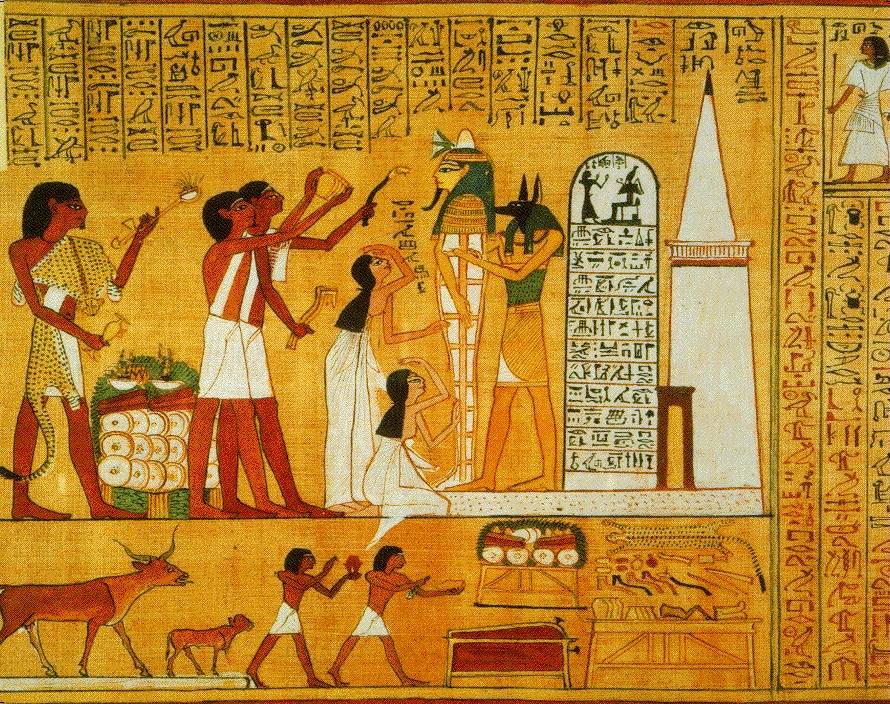 Formal analysis goes into what we learned about ancient “art”. For example; during the Egyptian and Mesopotamian times, the king was usually made to look bigger than everyone. People who were usually smaller and some who are cowering help get our eyes on the King/Ruler. One of the most important analysis on ancient art would be the attention to detail to something important. Usually the most important person or object would be the one who have been detailed enough to almost look 3D out of the 2D artwork. What the detailing and size tell about the ancient world was that their was a hierarchy. Going down an Art piece like the Egyptian make up holder showed that the King was always on top of all humans, but most importantly the Gods were always on top of the kings watching down. What we consider as Art now was likely considered just a piece of work back then, but reading and trying to understand Ancient art, we can understand their world a little better.
 It was my second time reading Paolo Friere’s, “